Six national physician organizations warned that claims of AI superiority undermine patient trust, putting new attention on how practices set rules for AI use by clinicians and staff.
Hybrid AI scribing pairs fast draft notes with human review to reduce errors, liability and physician workload.
AI scribing promises to free up a clinician’s time so they can see more patients without the burden of charting during an exam. Yet, many providers who test the technology walk away with the same conclusion: the draft note may arrive faster, but the work of validating it—and the risk of getting it wrong—still rests on their shoulders.
Even highly accurate AI-only ambient documentation solutions still need human review. More practices transitioning to AI-scribing are recognizing that, at least for now, the most practical path forward may not be “AI alone,” but AI with humans in the loop.
Human-in-the-Loop (HITL) is technology that includes human intervention—through supervision, correction or feedback—in order to improve AI reliability. This human oversight is essential for preventing AI from making decisions, that can have erroneous or serious consequences.
While AI is well-positioned to handle data-intensive, repetitive tasks, we still need trained professional to oversee tasks that require experience, complex problem-solving, and contextual understanding.
In real-world workflows, early objections to fully transitioning to AI scribing are evident: time savings can be marginal, and the process can add friction. Clinicians still find themselves editing, correcting, and reformatting—sometimes even copying and pasting content into the EHR—so that any promised efficiency gains become negligible.
Accuracy is a more significant issue. Even rare errors—or the perception that an AI platform might “hallucinate” and produce notes that appear to be accurate or plausible but contain inaccurate or misleading information— can undermine confidence.
In clinical documentation, a single mistake can create downstream patient safety concerns, billing problems, and trigger audits that could lead to costly litigation. Clinicians find it hard to adopt new technology that requires them to trust what they can’t fully verify in the moment.
AI scribing does offer meaningful advantages: it can capture conversation quickly, draft a structured summary, and strip out irrelevant side dialogue. When used properly, it can quickly turn a complex patient interaction into a clear, consistent SOAP note. This only translates into clinical value when a trained professional is responsible for confirming a draft is 100% correct.
Adopting a hybrid AI model, which sends AI-generated draft notes to experienced documentation specialists for review, shifts the burden of validation away from the clinician. Adding this layer of review, to correct errors and ensure notes meet specialty-specific guidelines before a provider signs off on a note, results in a streamlined workflow that improves speed and accountability.
For example, consider a recent appointment I had with my cardiologist. An AI-generated note captured the substance of the conversation relatively well, and produced a succinct note in the EHR. However, at least one inaccuracy was immediately apparent. My chart mistakenly indicated “chest pain,” an error that could lead to inaccurate diagnoses. This could have been avoided with a more thorough review.
That review step directly addresses a common AI adoption barrier: liability. Clinical notes are not just summaries—they are legal and financial artifacts. Human oversight reduces the potential for errors in AI-generated notes that compromise patient charts. This is a clear quality-control step that health systems can operationalize and measure.
Human-in-the-loop documentation is not a new operating model—it’s an evolution of what already works. For decades, clinicians have dictated notes that are then reviewed and finalized by specialized teams using templates and routing queues. Today, applying that same routing and quality-control discipline to AI drafts is the most direct way to scale scribing without scaling risk.
As AI scribing adoption increases, customer expectations are also rising. Many AI-only vendors will eventually add human review to meet requirements for reliability, specialty nuance, and governance. That shift is not trivial: it demands recruiting, training, credentialing, and ongoing quality assurance—capabilities that established clinical documentation organizations have built over years.
The winning healthcare documentation solution will be less about novelty and more about integrity. A hybrid AI approach, with the addition of trained scribe review, emphasizes consistent formatting, experienced specialty review and clear accountability so providers can spend less time editing charts and more time focused on patients.
In this context, “accuracy” means more than correct words. High-quality documentation supports appropriate coding and charge capture, withstands audits, and reduces ambiguity across the care team. Trust grows when clinicians know that someone qualified has reviewed the note, and the organization can point to a repeatable QA process.
Human-in-the-loop systems work best when they’re designed intentionally. AI can handle repetitive capture and first-draft structure. Humans provide judgment. They resolve ambiguity, correct subtle clinical errors, and ensure the note meets documentation standards. The point is not to slow the workflow down, it’s to make the output trustworthy enough to use at scale.
Over time, similar human-supervised AI patterns may extend to other medical administrative workflows, from eligibility checks to prior authorizations. For now, clinical documentation is the near-term proving ground, because the risk is clear, the workflow is well understood, and the benefits—regaining time lost to charting, producing better notes, and avoiding downstream issues—are measurable.
For healthcare leaders evaluating AI scribing, the question is not whether AI can draft a note. It can. The question is whether your organization can trust that note enough to put it in the chart, bill from it, and defend it. Adding humans into the loop—deliberately, with training and measurable QA—turns AI scribing from an experiment into an operational capability.
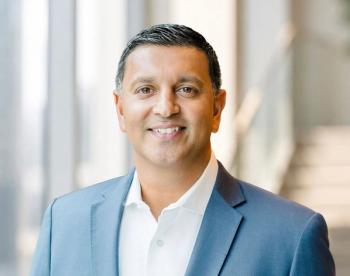
Terry Ciesla is senior vice president of